Author
staff writer
LiquidChain says its Layer 3 design can unify BTC, ETH and SOL liquidity in one execution environment as the $LIQUID presale approaches $1 million and the token trades at $0.0447.
 By staff writer
Updated
4 mins read
By staff writer
Updated
4 mins read
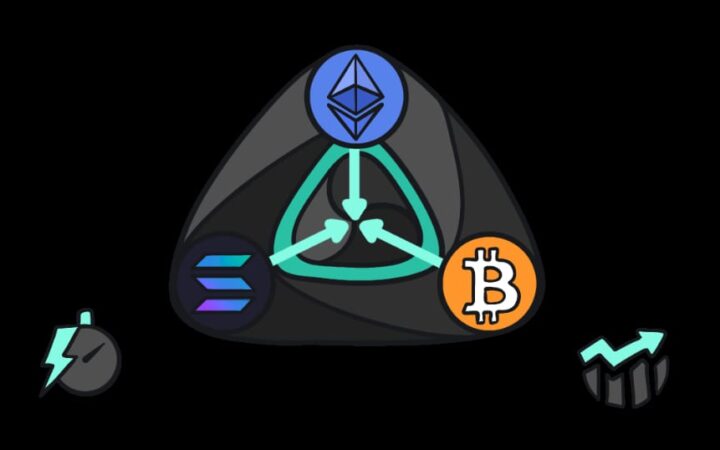
LiquidChain (LIQUID) is moving closer to a $1 million presale milestone as it advances a Layer 3 blockchain designed to bring together Bitcoin, Ethereum, and Solana in a single execution environment.
The project’s central thesis is that crypto still suffers from deeply fragmented liquidity. Rather than asking users to move capital between separate ecosystems through conventional bridges, LiquidChain is positioning itself as a coordination layer where BTC, ETH, and SOL liquidity can interact for faster and lower-cost applications.
That pitch is gaining traction as the presale continues, with LIQUID tokens currently priced at $0.0447 and the next price increase scheduled within hours.
LiquidChain describes itself as the first Layer 3 network built on top of Bitcoin, Ethereum, and Solana, aiming to serve as a unified liquidity and execution layer rather than a traditional Layer 2 or a simple bridge.
In practice, the idea is to let users and developers tap into the defining strengths of each major network without leaving the LiquidChain environment. Bitcoin provides capital depth and security, Ethereum offers mature smart contracts and a large DeFi ecosystem, and Solana delivers high throughput at low fees.
Together, the project says, those features can support cross-chain DeFi, payments, and other high-performance applications inside one verifiable framework.

The architecture is designed to reduce dependence on wrapped assets in many situations and to limit reliance on centralized intermediaries. Transactions are processed on the Layer 3, while finality can be anchored back to the underlying chains when required.
According to the project, this structure can allow BTC, ETH and SOL liquidity to interact more natively while cutting some of the frictions that usually accompany cross-chain activity, including higher costs, slippage and bridge-related security risks.
LiquidChain is entering a market where interoperability has become a central issue. Bitcoin still holds the largest pool of crypto capital, Ethereum remains the leading DeFi hub, and Solana has carved out a strong position in fast, high-volume applications.
Yet users typically still have to choose between ecosystems or move funds across them through processes that can be slow, expensive or operationally risky. LiquidChain’s Layer 3 model is aimed squarely at that problem by aggregating liquidity and execution across all three networks in one place.
For DeFi use cases, that could mean better capital efficiency and more flexible application design. Developers would be able to combine Bitcoin-backed settlement, Ethereum-based strategy logic and Solana-level speed within one environment instead of splitting products across separate chains.
Quiet moves. Higher layers. 🔥
LiquidChain L3. 👁⟁https://t.co/vqvBcdSQYC pic.twitter.com/SWWlwqlmUV
— LiquidChain (@getliquidchain) April 3, 2026
The project says this setup can support native cross-chain lending, borrowing, perpetual trading and yield farming that source liquidity simultaneously from Bitcoin, Ethereum and Solana pools. If achieved, that would create deeper markets and tighter spreads than isolated Layer 2 environments can typically offer.
It also opens the door to more advanced strategies, including BTC-backed ETH derivatives and leveraged positions executed with Solana-like speed, while keeping the system grounded in verifiable security and decentralization principles.
The native token for the LiquidChain network is LIQUID, which is intended to cover gas fees on the Layer 3, support staking and rewards, and eventually play a governance role as the ecosystem develops.
LiquidChain says holders will be able to stake $LIQUID to help secure the network while earning rewards. The project website currently lists an expected ROI of 1665% on staked tokens, a feature aimed at encouraging early participation and longer-term holding after the presale phase ends.
Total supply is fixed at 11,800,000,100 $LIQUID, with no further minting after deployment. On allocation, 35% is reserved for development and ecosystem growth, while 32.5% is assigned to LiquidLabs for marketing, media and community expansion across Tier 1 regions.
The remaining distribution includes 15% to the AquaVault treasury for partnerships and community activations, 10% for staking rewards and incentives, and 7.5% for exchange listings and broader ecosystem growth.
With the presale nearing the $1 million mark, the token remains available at what the project presents as an early-stage discounted price ahead of a future exchange launch.
Those looking to participate can do so through the official LiquidChain website, where $LIQUID can be purchased using SOL, ETH, USDT and other supported payment methods.
The team advises users to transact through secure wallets. Early buyers are also offered access to staking during the initial phases.
On security, LiquidChain says its smart contracts have undergone audits, including a SpyWolf review that found no malicious logic, no hidden minting functionality and no high-severity vulnerabilities in the core token contract.
Readers can follow the project through Telegram and X (Twitter) for updates and announcements.
Disclaimer: Coinspeaker is committed to providing unbiased and transparent reporting. This article aims to deliver accurate and timely information but should not be taken as financial or investment advice. Since market conditions can change rapidly, we encourage you to verify information on your own and consult with a professional before making any decisions based on this content.