Author
staff writer
As institutional investors pull over $1.4 billion from Bitcoin and Ethereum ETFs, capital is rotating into high-performance altcoins and unified liquidity protocols like Liquidchain.
 By staff writer
Updated
4 mins read
By staff writer
Updated
4 mins read
The cryptocurrency market is witnessing a significant tactical shift as institutional investors adjust their exposure. Recent data shows a substantial retraction from major crypto exchange-traded funds, with Bitcoin vehicles shedding over $1.2 billion and Ethereum products losing more than $215 million in outflows over the past week. However, this capital isn’t exiting the digital asset ecosystem entirely; instead, it is rotating into high-momentum altcoins and specialized infrastructure projects.
This reallocation highlights a growing demand for networks capable of solving liquidity fragmentation and delivering cross-chain utility. Among the emerging protocols capturing attention is Liquidchain, an innovative Layer 3 blockchain designed to bridge Bitcoin’s capital base, Ethereum’s deep DeFi ecosystem, and Solana’s transaction speeds. With its ongoing presale nearing the $1 million milestone, the project is positioning itself as a key beneficiary of this broader market transition.
The latest ETF flow metrics highlight a clear divergence in institutional behavior. According to SoSoValue data, while Bitcoin and Ethereum funds have faced heavy redemptions, targeted altcoin products are experiencing a quiet surge. Hyperliquid’s HYPE ETFs, for instance, secured between $72 million and $75 million in fresh inflows, while XRP and Solana products attracted $22 million and over $15 million, respectively, during the same window.
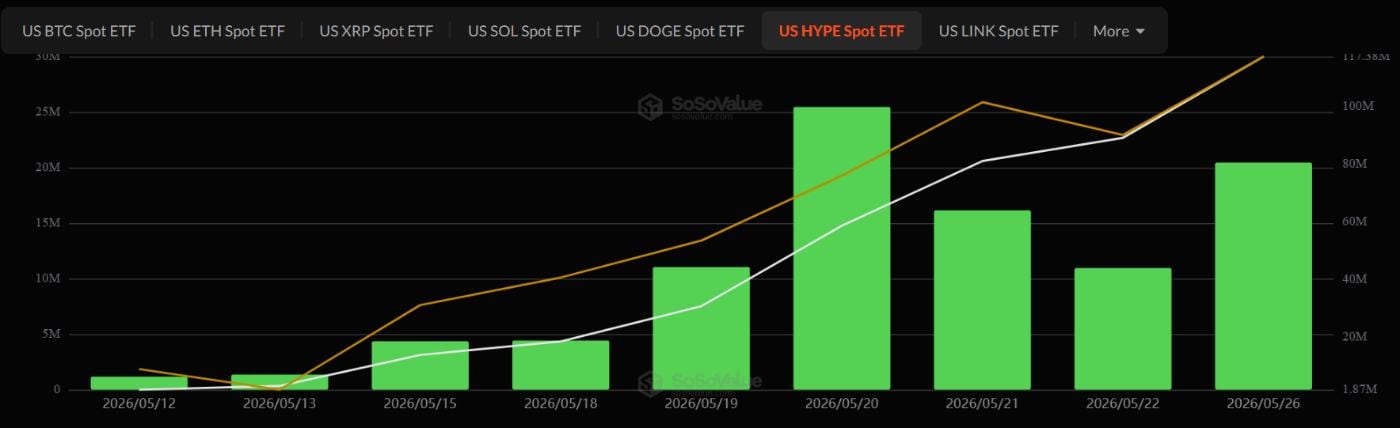
This targeted inflow has catalyzed strong price action for select assets. Hyperliquid’s native token, HYPE, reclaimed the $60 threshold today, posting a 24-hour gain of over 6%. Over the past month, the token has rallied an impressive 28%, driven by robust trading volumes on its derivatives platform and sustained institutional interest. This performance underscores a broader appetite for high-utility infrastructure plays amid macro consolidation.
Meanwhile, the market’s largest assets remain range-bound. Bitcoin continues to consolidate in a tight bracket near $76,000, while Ethereum struggles for upward momentum, hovering around $2,100. As large-cap assets pause, traders are rotating capital into ecosystems that address specific structural challenges within Web3—most notably, the issue of fragmented liquidity across isolated blockchains. This environment provides a strong tailwind for Layer 3 networks like Liquidchain that aim to unify these disparate ecosystems.
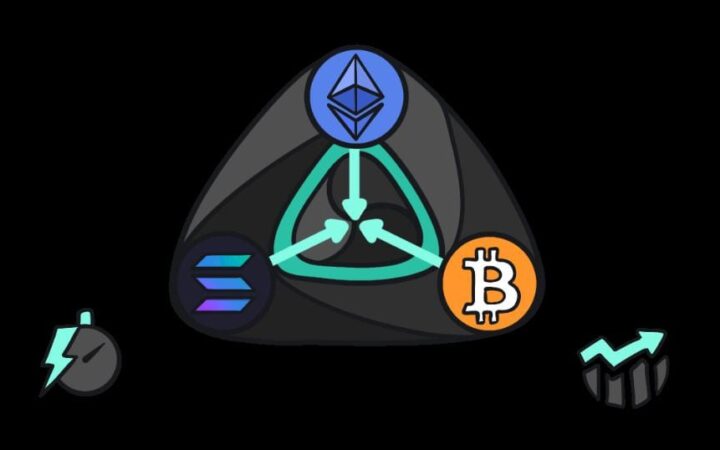
While established assets like HYPE and XRP lead the immediate market reaction, Liquidchain is gaining traction as a fundamental solution to the industry’s fragmentation problem. Operating as a dedicated Layer 3 network, Liquidchain is built to aggregate the distinct advantages of the top three blockchain ecosystems: the security and capital of Bitcoin, the smart contract depth of Ethereum, and the throughput of Solana.
Currently, moving assets between these networks requires complex, costly, and often insecure bridging mechanisms. Liquidchain resolves this by allowing users to bring BTC, ETH, and SOL into a single unified execution environment featuring near-instant transaction finality and minimal fees. By combining EVM compatibility with advanced cross-chain verification, the network allows developers to deploy cross-chain dApps without compromising on security or decentralized principles.
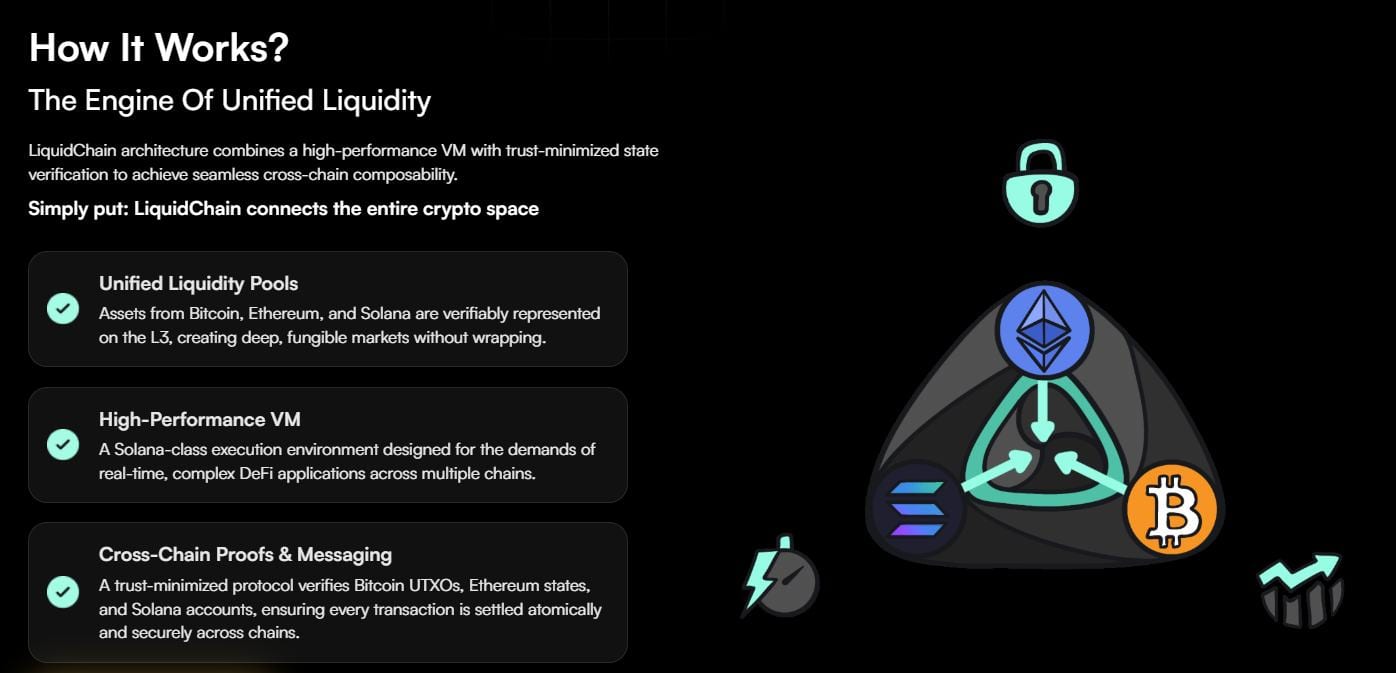
As institutional and retail players seek more efficient ways to deploy capital, protocols that offer verifiable liquidity integration are becoming highly valued. Liquidchain’s architecture directly addresses these efficiency demands, which explains the accelerating momentum behind its ongoing token presale as it approaches the $1 million funding mark.
For those looking to participate in the early stages of the network’s rollout, the Liquidchain presale is fully active. Interested participants can visit the official portal at https://liquidchain.com/ to connect a compatible wallet and acquire $LIQUID. The platform supports multiple payment methods, including ETH, BNB, SOL, USDT, USDC, and direct card purchases. Alternatively, purchases can be executed seamlessly via Best Wallet.
A core feature of the presale is the immediate staking utility. Participants can stake their newly acquired $LIQUID tokens immediately to begin earning dynamic staking rewards ahead of the mainnet launch. This mechanism has already seen significant engagement, with over 26 million tokens committed to the staking pool by early supporters seeking to maximize their yields.
The project’s tokenomics are structured to support long-term ecosystem health, allocating specific portions of the supply to continuous development, community rewards, and exchange liquidity. Once the presale concludes and the Token Generation Event (TGE) takes place, participants will be able to claim their tokens directly on the Liquidchain network.
To stay informed on technical milestones, testnet releases, and community events, you can follow LiquidChain on X and join their official Telegram group.
Disclaimer: Coinspeaker is committed to providing unbiased and transparent reporting. This article aims to deliver accurate and timely information but should not be taken as financial or investment advice. Since market conditions can change rapidly, we encourage you to verify information on your own and consult with a professional before making any decisions based on this content.