Press Release
DGrid: The OpenRouter of Web3 and the 1inch of AI Inference
This content is provided by a sponsor
When AI compute becomes the oil of a new era, DGrid is the pipeline – the first infrastructure of its kind that is truly community-owned, verifiable, and value-sharing. A profound paradigm shift is underway, one that is redefining how computation, ownership, and wealth are distributed. There is little doubt that AI is ushering in the Fourth Industrial Revolution. Yet beneath the surface of today’s AI boom lies a troubling reality. AI services remain expensive, opaque, and tightly controlled by a small group of technology giants. Companies such as OpenAI, Google, and Anthropic have built towering walled gardens. Developers and users are forced to consume black-box services with non-transparent pricing, while their data fuels model training without meaningful participation in the upside. Models can be throttled, censored, or deprecated overnight – often at the discretion of centralized platform policies.
Web3 was founded on a different promise: decentralization, user sovereignty, and shared value creation. But in one of the most critical domains of the future – AI – Web3 has remained largely absent, relying instead on centralized APIs that undermine its core principles.
That is now changing.
DGrid is rebuilding AI infrastructure from the ground up: a decentralized, modular, and fully verifiable AI inference network. Its mission is to make intelligent computation in Web3 trust-minimized, permission-less, and community-driven. If OpenRouter demonstrated the power of aggregating and routing across AI models, and if 1inch showed how optimal path discovery can unlock efficiency and value in DeFi, then DGrid represents the convergence of both ideas – extended into an autonomous, crypto-native framework.
DGrid = the OpenRouter of Web3 + the 1inch of AI inference + autonomous AI DAO
DGrid vs OpenRouter: Web3-Native Infrastructure Versus Web2 Optimization
In today’s AI model aggregation landscape, OpenRouter stands out as a strong early pioneer. It effectively addressed a critical pain point for developers by abstracting away the complexity of integrating multiple model APIs. However, at its core, OpenRouter remains a Web2 SaaS platform, inheriting the fundamental limitations of centralized systems. DGrid is not attempting to become another OpenRouter. Instead, it seeks to surpass the model aggregation paradigm entirely by applying Web3-native principles from the ground up.
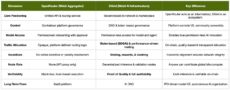
The difference is not incremental – it is structural.
- Where traditional aggregators rely on centralized trust and platform-controlled incentives, DGrid introduces a token-based economic model and DAO governance. This architecture directly addresses two persistent challenges that Web2 aggregators struggle to solve: incentive misalignment and trust overhead. Participants in the network – whether compute providers, model contributors, or developers – are economically aligned and transparently rewarded, without relying on a single coordinating authority.
- From a performance perspective, DGrid is designed to be fully competitive with centralized aggregators, with a particular advantage in routing and serving long-tail and emerging models, where decentralized supply can outperform centralized provisioning.
In this sense, DGrid is not adding another layer to the existing stack – it is multiplying its capabilities. What Web2 platforms achieve through optimization and scale, DGrid approaches through crypto-economic coordination and verifiable infrastructure.
Technical Core: The “Trust-less Inference” Revolution Grounded in Academic Rigor
DGrid’s confidence is built upon a foundation of robust academic research and technical breakthroughs. Its theoretical framework is derived from a cutting-edge paper, led by a team of PhDs and co-founders who are not only experts in cryptography but also pioneers in AI system architecture. The DGrid architecture addresses the most daunting challenge in decentralized AI: How to guarantee the quality of AI inference results in an environment of untrusted nodes?
1. Proof of Quality (PoQ): Making Inference Auditable
In a centralized world, you have no choice but to blindly trust the results returned by OpenAI. In a decentralized network, however, nodes might return inferior results to save costs or even act maliciously. DGrid innovatively introduces the “Proof of Quality (PoQ)” mechanism – a challenge-based system combining cryptographic verification with game theory. Specialized “Verification Nodes” randomly sample and re-verify inference tasks. If a node’s output fails verification, its staked $DGAI tokens are slashed. This ensures every inference transaction is transparent, traceable, auditable, and fair. This marks the “trust-less” moment for the AI industry.
2. Modular and Elastic Architecture
- Decentralized Inference Network: No single point of failure and no centralized control. A globally distributed network of nodes collectively maintains system robustness.
- AI RPC Interface: For dApp developers, integrating DGrid is as simple as connecting to a standard blockchain RPC. A unified gateway provides seamless access to all global LLMs and AI models.
- Node Incentive Economy: Anyone can run a node, provide computational resources, and earn rewards. This is more than a technical network; it is a computational economy.
3. How DGrid Works
- Developers send requests via DGrid’s standard AI RPC interface (e.g., “Invoke this prompt using Llama 3”).
- The DGrid Network routes the task to the optimal inference node based on staking and performance metrics.
- The node executes the computation, while the Blockchain Layer handles verification (PoQ), settlement, and reward distribution.
- Users receive transparent, trusted AI inference results at a fraction of the cost.
Backed by Top-Tier Capital and Ecosystem
DGrid has secured strong backing from leading crypto venture capital firms, including Waterdrip Capital, IOTEX, Paramita, Abraca Research, CatherVC, 4EVER Research, and Zenith Capital.
Beyond being a protocol, DGrid is rapidly evolving into a massive ecosystem:
- Global Computing Network: Connecting decentralized AI nodes distributed across the globe.
- Broad Integration: Early integration with leading DeFi, GameFi, SocialFi, and AI Agent protocols to inject “intelligent power” into Web3 applications.
- Strategic Partnerships: Established alliances with Web3 infrastructure giants and top-tier model Providers.
Ultimate Value Capture: DGrid Premium NFT and Tokenomics
While DGrid’s technical vision is compelling, its economic model and user rights are impossible to ignore. Understanding that the community is the heart of Web3, DGrid has designed an AI-driven value-return system centered around the DGrid Premium Membership NFT.
Benefit I: The “All-in-One” AI Lifetime Membership
Holding a DGrid Premium NFT grants direct access to premium features of all top-tier models on the DGrid.AI platform, covering almost every major AI product globally. Forget individual subscriptions to OpenAI (ChatGPT Plus), Google Gemini 3 Pro, or Anthropic Claude Pro. DGrid aggregates these elite models into a single membership at a significant discount: $1,580 USD for the first year, with renewals at only $200 USD per year thereafter. For heavy AI users, developers, and teams, this represents both a massive cost saving and a leap in efficiency – the keys to the entire AI arsenal.
Benefit II: Stakeholder Rights – 50% of Total $DGAI Supply
This is the most aggressive aspect of DGrid’s economic model. 50% of the total supply of the platform token, $DGAI, will be released exclusively to DGrid Premium NFT holders. This NFT is more than a symbolic card; it represents “equity” in the future value of the entire DGrid ecosystem. As inference volume grows and more AI Agents run on the network, the value-capture potential of $DGAI becomes exponential. These tokens are not just an airdrop; they serve as a permanent credential for early builders and core supporters of the DGrid network.
Join the Paradigm Shift in Computation
Web2 AI giants are attempting to establish a new digital hegemony. They own the data, they own the compute, and they dictate the rules. DGrid is not just a project; it is a movement for AI Equality.
We are committed to breaking monopolies, making AI inference a decentralized, accessible, and verifiable public utility – just like electricity. With an architecture superior to OpenRouter, a vision comparable to 1inch, solid academic backing, and a determination to return 50% of the value to the community, DGrid is redefining the industry. The metric of the AI era is no longer whose model has more parameters, but whether the computing power truly belongs to the people. Sales for the DGrid Premium NFT began on January 1, 2026. This is more than a purchase; it is a choice to stand with the future and master the wealth of decentralized compute.
Join us on X. Check out the techpaper and whitepaper.
Disclaimer: This publication is sponsored. Coinspeaker does not endorse or assume responsibility for the content, accuracy, quality, advertising, products, or other materials on this web page. Readers are advised to conduct their own research before engaging with any company mentioned. Please note that the featured information is not intended as, and shall not be understood or construed as legal, tax, investment, financial, or other advice. Nothing contained on this web page constitutes a solicitation, recommendation, endorsement, or offer by Coinspeaker or any third party service provider to buy or sell any cryptoassets or other financial instruments. Crypto assets are a high-risk investment. You should consider whether you understand the possibility of losing money due to leverage. None of the material should be considered as investment advice. Coinspeaker shall not be held liable, directly or indirectly, for any damages or losses arising from the use or reliance on any content, goods, or services featured on this web page.
Related Articles