
LiquidChain ($LIQUID) unifies Bitcoin, Ethereum, and Solana liquidity through a Layer-3 network, offering real utility and growing presale momentum.
LiquidChain ($LIQUID) is a new crypto presale launched amid a time when fragmentation defines the broader crypto landscape. Liquidity is spread across multiple blockchains, capital efficiency is reduced, and DeFi activity often slows during bearish conditions.
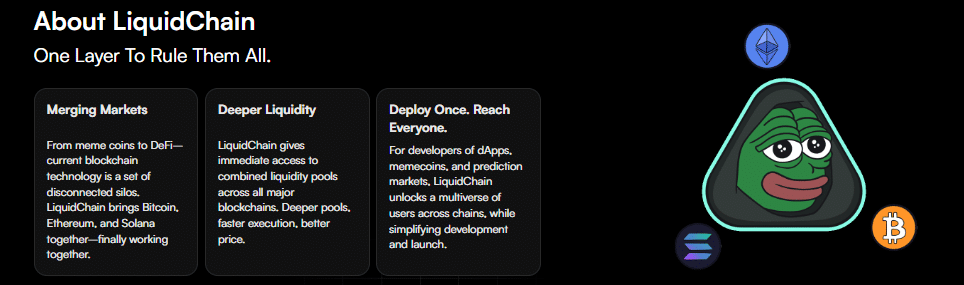
Instead of competing with short-term narratives for attention, LiquidChain addresses this structural problem directly by unifying liquidity across Bitcoin, Ethereum, and Solana through a dedicated Layer-3 network.
This positioning has helped LiquidChain gain early traction. According to the project website, the crypto presale has already raised over $300,000 in a relatively short period, despite cautious market sentiment. That response reflects growing interest in infrastructure projects that aim to improve how capital moves between chains, especially during periods when liquidity becomes more selective.
Crypto Presale With Utility Designed for Fragmented Markets
Market fragmentation creates inefficiencies that become more visible during downturns. Liquidity thins out, transaction costs rise, and capital often becomes trapped within isolated ecosystems. LiquidChain is built to function as a coordination layer that sits above existing blockchains, allowing Bitcoin, Ethereum, and Solana liquidity to interact within a unified framework.
Rather than replacing these networks, LiquidChain connects them. Bitcoin provides settlement security, Ethereum offers smart contract flexibility, and Solana delivers high-speed execution. LiquidChain’s Layer-3 design is intended to let these strengths operate together, improving liquidity flow without relying on traditional bridge mechanisms that often introduce additional risk.


This approach is especially relevant in bearish conditions. When capital becomes more risk-aware, efficiency matters. The projects that reduce friction and improve access to liquidity tend to maintain relevance even as speculative activity slows. That structural focus places LiquidChain among infrastructure-driven projects often discussed during uncertain market phases.
What Matters When Liquidity Becomes Selective
Bear markets often expose weaknesses in DeFi infrastructure. Fragmented liquidity limits volume, while isolated chains struggle to attract consistent activity. LiquidChain’s unified liquidity model is designed to counter these effects by allowing capital to move more freely across major ecosystems.
For DeFi protocols, access to combined liquidity pools can improve resilience during periods of low volume. Applications built on LiquidChain are designed to tap into Bitcoin, Ethereum, and Solana liquidity simultaneously, reducing dependence on any single network’s activity levels. This flexibility becomes increasingly valuable when markets shift from expansion to preservation.
As liquidity fragmentation continues to challenge existing DeFi models, networks focused on interoperability and coordination gain strategic importance. That long-term relevance strengthens the case for LiquidChain as an altcoin to consider tied to infrastructure utility rather than short-lived market cycles.
Crypto Presale Momentum Builds as $LIQUID Staking Drives Scarcity
The $LIQUID crypto presale adds momentum to the project’s rollout. The current presale price stands at $0.0128, with incremental price increases scheduled every few days. This staged structure reflects a gradual progression that rewards early participation while maintaining a clear path toward later phases.
Staking is a core component of the LiquidChain ecosystem. Early staking incentives are designed to attract initial participation, but staking yields are not static. As more tokens are staked, APYs are designed to decrease over time.

The total supply of 11,800,000,100 $LIQUID is allocated, with 35% dedicated to development. LiquidLabs holds 32.5% to support ecosystem growth and global expansion. AquaVault accounts for 15% of the portfolio, focused on partnerships and strategic development. Rewards are received at 10% for staking and community incentives, while 7.5% is allocated for growth initiatives and exchange listings.
Combined with declining staking yields as adoption grows, the presale structure reinforces scarcity dynamics often associated with early-stage infrastructure networks.
Why $LIQUID Stands Out in Bearish Conditions
LiquidChain’s design aligns closely with market realities shaped by fragmentation and reduced risk appetite. Instead of relying on hype-driven adoption, the network focuses on solving liquidity inefficiencies that persist regardless of market direction. That utility-first approach often becomes more visible during bearish periods, when capital prioritizes function over speculation.
By unifying Bitcoin, Ethereum, and Solana liquidity, LiquidChain positions itself as a connective infrastructure rather than a competing ecosystem. This supports relevance across multiple market cycles while addressing a core limitation of today’s multi-chain environment.
As the crypto presale advances and staking participation increases, early conditions may shift quickly. Rising presale prices and declining staking APYs reinforce timing dynamics often seen in infrastructure-driven launches. Combined with its Layer-3 utility, LiquidChain continues to strengthen its position within the evolving cross-chain DeFi sector.
Discover the future of cross-chain infrastructure with LiquidChain:
Website: https://liquidchain.com/
Social: https://x.com/getliquidchain
next