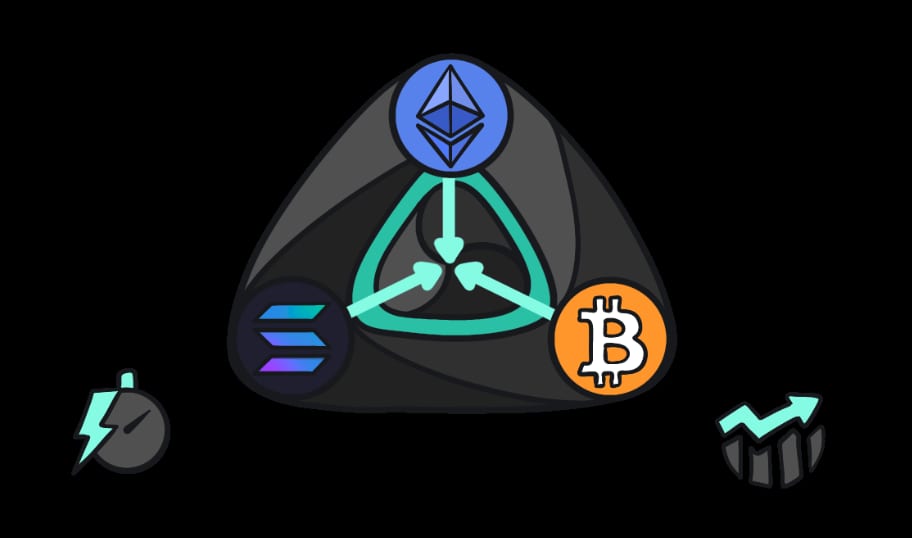
Hyperliquid’s HYPE gained 28% in seven days and briefly overtook Solana on a fully diluted valuation basis as ETF outflows continued. The same rotation is also drawing attention to LiquidChain’s cross-chain Layer 3 presale.
Capital rotation remains one of the market’s clearest themes, with traders moving away from some large-cap assets and toward protocols tied to on-chain utility. That shift has helped push Hyperliquid’s HYPE token up 28% over the past seven days, with the token briefly surpassing Solana by fully diluted valuation.
The backdrop is notable: spot Bitcoin and Ethereum ETFs are still seeing steady outflows, while higher-performance decentralized infrastructure projects are attracting renewed attention. In that environment, projects centered on execution speed, liquidity depth, and cross-chain functionality are starting to stand out.
Among them is Liquidchain, a Layer 3 protocol designed to connect Bitcoin, Ethereum, and Solana in a single environment. The project is still in presale and has raised close to $1 million so far, placing it on the radar as investors look beyond the biggest tokens for the next leg of infrastructure-led growth.
Hyperliquid has become one of the market’s more prominent winners in the current cycle. At the time of writing, HYPE was trading at $59, up 45% from a month ago, underscoring how quickly traders have been rotating into higher-beta altcoin opportunities while Bitcoin consolidates around the $77,000 mark.
literally one of the most insane charts in crypto during a full blown bear market where the whole industry is considered dead lmao
$100 is programmed.
hyperliquid. pic.twitter.com/NZ2ER9bZio
— lyxe (@cryptolyxe) May 21, 2026
Spot Bitcoin ETFs recorded another stretch of outflows this week, with some sessions showing redemptions worth hundreds of millions. Ethereum products have also remained under pressure. By contrast, decentralized perpetual trading platforms such as Hyperliquid have seen stronger on-chain activity, with daily volumes often running ahead of many centralized exchanges.
Market watchers have tied that performance to a straightforward set of strengths: fast order execution, deep perpetual liquidity, and a fully on-chain order book. Those features have helped Hyperliquid capture a leading share of the decentralized derivatives market and reinforced its reputation as one of the clearest examples of DeFi products gaining traction through actual usage.
Think people are still heavily underestimating the upside potential for $HYPE here.
For the first time, we are seeing a breakthrough crypto native application outside of BTC and stablecoins, which most of CT is not used to.
Throughout each past cycle longing the platform where…
— Daniel Cheung (@HighCoinviction) May 21, 2026
That resilience matters because broader sentiment is still cautious. Bitcoin is holding important support levels, but upside momentum has been uneven. As a result, money is increasingly gravitating toward more specialized narratives, particularly infrastructure and cross-chain efficiency. Hyperliquid’s recent token strength and trading activity have made it a key reference point for that trend.
Why the Rotation Is Also Benefiting Cross-Chain Infrastructure
Hyperliquid’s gains are centered on perpetuals, but the broader market shift appears to extend further than one category. Investors are also revisiting projects that address a deeper structural issue across crypto: fragmented liquidity between major chains.
LiquidChain (LIQUID) is positioning itself around that exact problem. The protocol is building a Layer 3 blockchain intended to bring together Bitcoin’s capital base, Ethereum’s DeFi ecosystem, and Solana’s execution speed in one high-performance framework.
Its pitch is that users should not have to depend on wrapped assets and multiple bridge layers just to move value and use applications across ecosystems. Instead, LiquidChain aims to create unified liquidity pools where Bitcoin, Ethereum, and Solana-based assets can interact natively. The intended result is better capital efficiency, faster trading, and safer cross-chain settlement through atomic proofs and advanced messaging protocols.
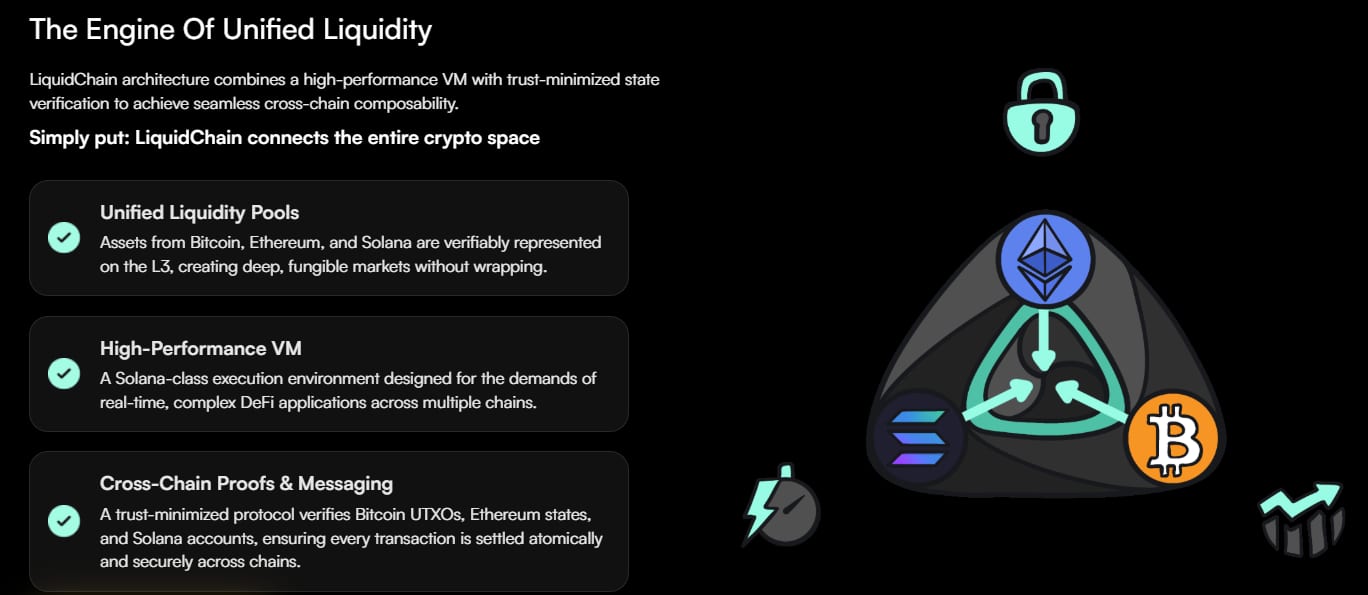

The protocol also uses a specialized virtual machine built for real-time applications, giving developers access to the advantages of the three major chains without forcing a tradeoff between performance and security. In practical terms, LiquidChain is presenting itself as a unified execution layer for applications that have so far been limited by blockchain interoperability gaps.
LiquidChain’s Layer 3 Thesis Gains Attention
The project’s timing may be helping its visibility. As capital shifts away from some established Layer 1 names toward platforms with more explicit technical differentiation, LiquidChain’s focus on liquidity unification targets a pain point that both traders and developers know well.
Its core proposition overlaps with some of the same market drivers supporting Hyperliquid’s rise, namely deeper liquidity and better execution, but applies that logic to a broader multi-chain setting. Rather than concentrating only on a high-volume trading use case, LiquidChain is aiming at foundational infrastructure across ecosystems.
That framing appears to be resonating with early buyers. Even during periods of consolidation elsewhere in the market, the LiquidChain presale has continued to attract interest, and the project has raised close to $1 million to date. That early funding points to confidence in both its roadmap and its place in the expanding Layer 3 discussion.
Presale Terms and Participation Details
The $LIQUID presale is now live at $0.01461 per token. Buyers also have the option to stake directly during the presale, with staking rewards of up to 1,410% APY available at this stage.
According to the project, token allocation is structured around ecosystem growth, development, liquidity provision, and community initiatives. That distribution model is intended to support longer-term development rather than a purely short-term launch cycle.
Three Thrones for Three Kings. 👑
All wrapped in the world's greatest L3. ⟁👁https://t.co/vqvBcdSQYC pic.twitter.com/j6dG8ZoHZd
— LiquidChain (@getliquidchain) May 19, 2026
Participation is available through the official LiquidChain presale site by connecting a wallet. Supported payment methods include ETH, BNB, SOL, USDT, USDC, BTC, and bank cards. Best Wallet users can also join through the mobile app on the Apple App Store and Google Play.
For ongoing updates, investors can follow LiquidChain on X and join the official Telegram group.
next