For years, the crypto industry has promised us the ability to “be our own bank,” but in practice, that usually means juggling three different apps. One to store your keys, one to trade, and a third to actually spend anything. It’s a fragmented mess that keeps mass adoption perpetually five years away. Blofin’s new Web3 […]

For years, the crypto industry has promised us the ability to “be our own bank,” but in practice, that usually means juggling three different apps. One to store your keys, one to trade, and a third to actually spend anything. It’s a fragmented mess that keeps mass adoption perpetually five years away.
Blofin’s new Web3 Wallet brings everything into a single, coherent mobile experience. Launched late last year, it aims to be a storage locker for your digital assets and a financial tool that lets you buy your morning coffee.
The “All-in-One” Promise
Most non-custodial wallets are glorified keychains. You hold your assets, but if you want to do anything with them, you have to connect to a third-party dApp. Blofin takes a different approach by baking the utility directly into the interface.
The wallet supports over seven major EVM-compatible chains, including Ethereum, BNB Chain, Arbitrum, Optimism, and Polygon, right out of the box. A great feature here is the unified address system. Instead of managing a spreadsheet of different addresses for different networks, Blofin generates a single identity for your EVM assets. It’s a small quality-of-life tweak that makes the experience feel significantly less technical.
Inside the app, the “swap” function uses smart routing to find execution prices across various DEXs and CEXs with fluid cross-chain swaps. You can move from USDT from Arbitrum to Ethereum without needing to hunt for a third-party bridge or worry about gas tokens on the destination chain.
Spending Power: The Killer Feature
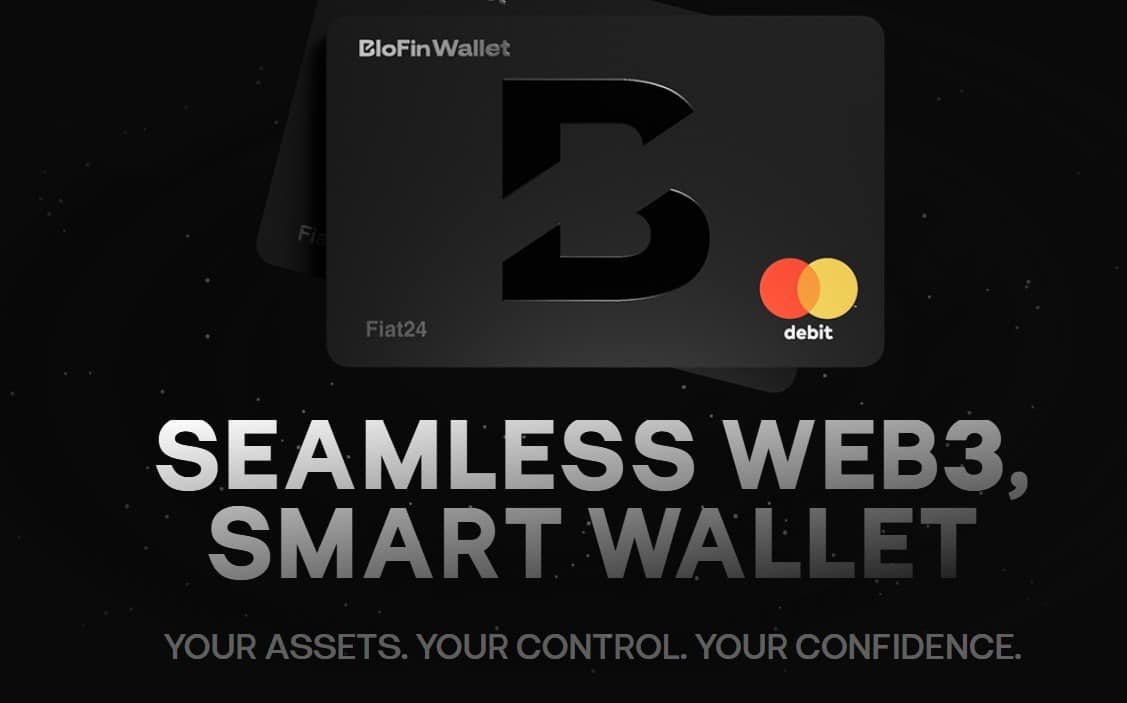
The real reason you’d switch to Blofin is the payment integration, which embeds a digital MasterCard directly into the wallet infrastructure.
Once you verify your identity (you only need to do that if you want the card), you can issue a virtual card instantly. There are no activation fees or monthly maintenance charges, and you can link the card to Google Pay or Apple Pay to buy a coffee with your wallet balance. The transaction settles instantly, converting the crypto to fiat at the point of sale.
This is the “holy grail” utility that many projects promise but few deliver smoothly. It effectively turns your self-custody wallet into a neobank account. You aren’t just holding volatile assets; you have liquidity.
Under the Hood: MPC Security
Security is the boring part of crypto until it becomes the only part that matters. Blofin has opted for Multi-Party Computation (MPC) technology rather than the traditional seed phrase model.
With MPC, your private key is never stored in a single location. Instead, it’s broken into “shares” distributed across your device and Blofin’s servers. To sign a transaction, these shares must come together. This eliminates the single point of failure that plagues traditional wallets. If you lose your phone, you haven’t necessarily lost your funds, provided you have your recovery methods set up.
For the average user, this is a massive upgrade in safety. It removes the anxiety of writing a 12-word phrase on a piece of paper and hiding it in a sock drawer.
The User Experience
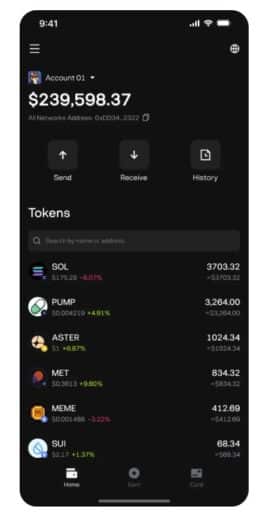
The app is clearly built for a mobile-first generation. The interface is clean and avoids the clutter of “developer-focused” wallets. Balances update in real time, and the “Earn” tab offers staking options for assets without requiring you to leave the app.
It’s worth noting that while the wallet is non-custodial, the ecosystem feels curated. You aren’t thrown into the deep end of Web3; you’re guided through it. This is great for 90% of users, but power users might find the hand-holding slightly restrictive if they want to interact with obscure, unlisted smart contracts.

The Privacy Trade-Off
To use the “Global Payment” features – the debit card and the fiat on-ramps – you have to complete KYC (Know Your Customer) verification. So if you want to unlock this feature, you’ll need to do that, which is a necessary evil for regulatory compliance in 2026.
Pros and Cons
Pros:
- The integrated MasterCard works seamlessly with Apple/Google Pay, making crypto actually spendable.
- Eliminates seed phrase anxiety and reduces the risk of a single point of failure.
- Managing assets across multiple EVM chains is intuitive with a single address.
Cons:
- The best features (payments) are locked behind identity verification.
- As a newer entrant, it lacks the decade-long battle-testing of competitors like MetaMask or Trust Wallet.
Verdict
The Blofin Wallet is a polished, forward-thinking product that arguably solves the biggest headache in crypto: usability.
If you are a privacy absolutist who wants zero interaction with the traditional financial system, this isn’t for you. But for the rest of us, who just want to pay for lunch with our trading profits without jumping through five hoops, Blofin is a compelling new standard.
next